
História
True Surfing


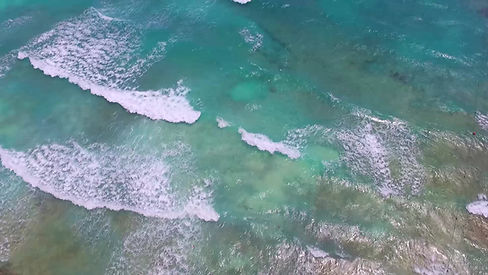
Surf in the English language designates the maritime surface waves breaking in coastal zone (breakers). In Portuguese Surf designates the Surfing sport itself, Surfe is used in Brazilian.
The “To surf” definition must be considered, since it concerns the essence of the proficiency studied. This is the sport of surfing (he’e nalu (wave-sliding), surf-bathing, Hawaiian sport of surf playing, swell driving, surf riding, surf board swimming, wave-riding, surfing). “Surfing is the sport of riding across the face of a wave while standing on a specialized board” (Orbelian, 1982) “The art of standing up while riding diagonally across a wave front” (Finney & Houston, 1996); “Travel on the wave [...] slide on the wall of the wave, [...] towards the beach” (Moreira, 2007).
Therefore, it should be clear that any Surfer is always referring to a wave face ride (Finney&Houston, 1996) (Young, 1983) (Pukui, 2003) (Warshaw, 2005), never to a straight-off ride on the white-water wash of the collapsed wave. We also refer to the judging rules: “The contestant that systematically chooses the waves that close out should be penalized (in the score) for having choice and acting against the spirit of surfing” (Jonet, 1989). Catching a wave means a controlled descent through turns, travelling/cutting the wall of wave, i.e. in nautical terms manoeuvring. This greatly reduces the location of quality peaks, and the opportunities for surfing (good waves available from the whole sets).
It has huge implications on proficiency, for the outside must be reached, and the lineup must be read, to find the first take-off zone (the point where the swell collapses to become surf): they have to deal with the currents and the possibility of not being able to catch waves (i.e., returning to shore!). Very strong indignation was caused by tourists bragging of being surfers when poorly riding in white-water from small broken waves, while they understood nothing of the Ocean (Crowe, 2002); so in 1911 native Hawaiians revived the practice of “true surfing”, in the organized form of a the Hui Nalu club (Finney&Houston, 1996) (Hall, 2004).


Missão
OBJECTIVES
The goal is to understand and organise the surfing master’s knowledge about the surf and currents, so that information for spacial and temporal pattern recognition at sea, surf and currents may become public, having a practical application for Beach Safety.
In my master thesis we aimed to classify and systematize the expert surfer’s wave knowledge, “using objective, accessible, exact, concise sport terminology” (Peixoto, 1993).
Starting Question and Problem:
In order to fit the line of investigation, an initial, very broad, question arose to review the knowledge already produced about the various areas of study: ‘It is possible to systematize the knowledge about the surf zone that defines surfer's proficiency, whether in sports practice or in sea rescuing?’
Foreword: Unacceptable Mass Drownings in Surf Bathing
In our approach we go for the problem of safeguarding human life when bathing/ swimming in our Portuguese sea, from the perspective of the most efficient lifeguard – the very experienced and informed surfer, used to big waves, with exceptional fitness. “[Hawaiian, North Pacific] Surfers made the best lifeguards because they have experienced first- hand how powerful the ocean can be. They also knew the most about its many variables, including waves, wind conditions, currents, rip tides, channels and shore breaks”; “people who understand the ocean and are not afraid of it” (Coleman, 2001). In Oceanic coastline, where all environment elements are commonly present with uncontrollable forces (and occasionally brutal, by conjunction of variables that to the layman tourist look ordinary), these wave runners possess a practical knowledge about the Ocean’s wave-currents dynamics in the wave breaking coastal zones (“surf zones”), which is fundamental in Beach Safety and in Sea Rescue. In Portugal [North Atlantic] the “surfer lifeguard” brought new knowledge and practices that were applied from 1973 in “new methods and equipment” in rescue practices. This resulted in no more drownings in beaches where it was frequent. “The choice of lifeguards surfers is an added value to any beach on the Atlantic coast”, “a sea with strength and currents, unpredictable and where we find changes in the currents, the size and strength of the waves in just a few hours” (Rocha, 2008).
These experienced sporting watermen, “extremely proficient ocean swimmer and surfer [...] who can make informed decisions and predetermine the level of risk they will face” (Guisado, 2003), “know how to identify, to anticipate and to explain the risks” (Coleman, 2001), are the most capable and competent rescuers (Surf Life Saving Association of Australia, 1975). In these conditions, the understanding of the phenomena, a good knowledge of surf conditions, is vitally important to all surfers (Orbelian, 1982) (Somers, 1988) (Lowdon, 1988) (Noll and Gabbard, 1989) (SLSAA, 1974) (Collins, 1992) (Dupouey, 1997) (Jenkins, 1993) (Butt, 2002) (Colburn et al, 2002) (Slater & Borte, 2003). Aware of the importance of “playing by the ocean’s rules”, expert surfers pass on this Wave Knowledge and “sea reading” ability, in each surf spot, to their infants and local peer group (Carroll, 1994) (Young, 2003) (Hall, 2004) (Rocha, 2008) (Pereira, 2001) (Jarvis, 2004). “The best surfers learn from the very best, growing up immersed in a multi-generational culture of complete ocean awareness” (Slater, 2005).
Among beach users, this “awareness” is misunderstood; these “secrets of the sea” are complex and not obvious. The urban common sense and the general teachings of classic mechanics are inappropriate in the Portuguese coast bathing zones, a chaotic system with ocean waves and currents. Here wave heights remain above 1 meter for 95% of the year, and above 4 m for 5% of the year (Instituto de Meteorologia, 2007). Moreover, some natural environments, like high-mountain, rafting waters, scuba-diving depths, and surf zones, require being aware that human technology and intellect cannot domesticate the forces in presence. Nature, although accessible in artificial coastal zones (of banal urbanization and coastal compression), is wild. When facing a challenge with a danger level beyond one’s competences (knowledge, skills, aptitudes), there must be full consciousness that, by insisting, the experience may become adverse or even disastrous and tragic (Swarbrooke, 2003). In this leisure practice of surf bathing, it is fundamental, vital, to be informed and aware of the risks, being able to identify the intensity and dynamics of nature’s forces present, as well as the hazardous places (Surf Life Saving Association of Australia, 1974). The flat water swimming skills and swimmers’ physical fitness are not enough to ensure the ability to return to the coast, as the Portuguese Lifeguard Manual advises (Pereira, 2001).


Ocean Awareness.
Wave Knowledge?
“Wave judgement is the most difficult aspect of surfing to master. It takes years to accumulate the experience needed to deal with the multitude of situations the sea is capable of” (Orbelian, 1982). We research into the possibility to systematize the surfer’s “wave knowledge” about wave-currents dynamics in the surf zone by using a classification of the relevant signals from the coastal process (dynamic, non-linear). For risk assessment, the game rules, the context evaluation, the “ocean reading” ability, the “wave knowledge” skills: “Which are visual cues that enable evaluating the variables specifiers of the characteristics of waves and currents, and especially which are relevant to the surfing conditions at hand?”.
“Most accomplished big wave riders are in their thirties. It takes a long time to build the experience and, mainly, the judgement required to ride big waves” (Ricky Grigg, in Noll & Gabbard, 1989). The associated problem is the “wave judgement”, skill necessary to catch waves: “Which are the relevant signals about the surf shape characteristics, to evaluate the plan where the breaking wave passes, and its profile and strengths?”.
Pertinence and Complexity
“The area of the coast where the waves break is one of the most difficult maritime regions to study due to the high intensity and non-linearity of the waves and currents. Beyond the scientific interest motivated by open issues, it is a strip that we need to understand, that it is crucial to coastal erosion, dissipating wave energy, coastal works, sediment transport, pollutant dispersion, surfing and safety of swimmers and boats” (Bicudo, 2007).
The task of reading and understanding the ocean waves (“observe, analyse, decode, compare and deduce”), is ambitious, “somewhat foolish for the extreme complexity involved” (Dupouey, 1997). We pursue an original task of explaining the reading of the signals picked up on the ocean coastal waves and currents dynamics; parameterizing objectively the essence of a shared collective consciousness (Slater, 2005).Andbydoingitinamaritimepopulationthat share a feeling of competition among themselves, cohesive and used to live in uncertainty and danger (Moreira, 1987), for whom any spreading of the “local wave knowledge” (such as surf-travel guidebooks, surf-reports, surf-trip diaries) is “regarded by many surfers as nothing less than heretical, as it revealed in just a few short pages information that had taken local surfers years to accumulate” (Warshaw, 2005).
